Acne or Folliculitis? How to Tell the Difference (and Why It Matters)
Acne is caused by clogged pores, excess oil, and C. acnes bacteria. Folliculitis is a bacterial or fungal infection of the hair follicle.
4/19/20265 min read
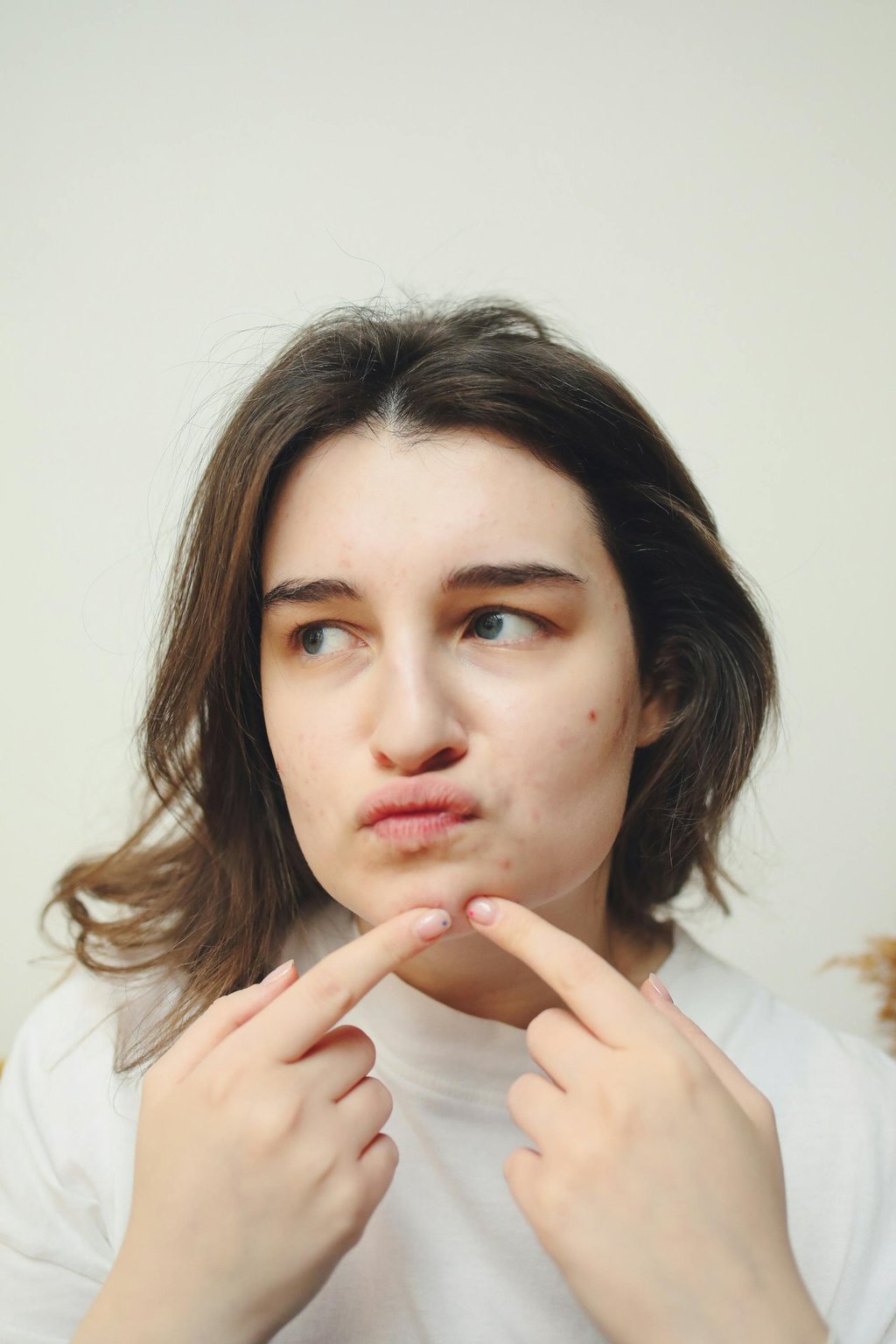
Quick answer: Acne is caused by clogged pores, excess oil, and C. acnes bacteria. Folliculitis is a bacterial or fungal infection of the hair follicle. Acne lesions vary in size and feel tender. Folliculitis bumps are small, uniform, often have a hair in the center, and tend to itch rather than hurt. Treating one like the other almost always makes the condition worse.
If you have been fighting what you thought was acne for months with stronger cleansers, spot treatments, and exfoliating acids, only to watch it get worse, there is a real chance you are not dealing with acne at all. You may have folliculitis, and the two conditions need nearly opposite approaches.
At K Beauty Lab Seattle, we see this every week at our skincare lab. A client comes in frustrated, convinced their acne routine stopped working, when in reality their skin needs a completely different approach. This guide will help you figure out which one you have and what to do about it.
What Is Acne?
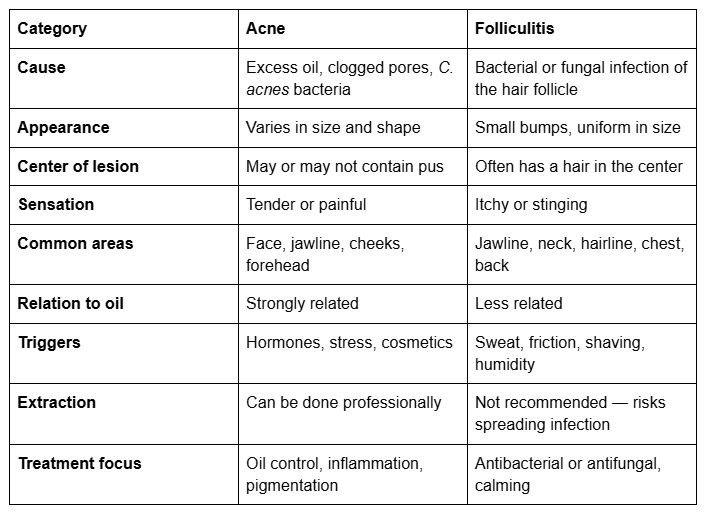
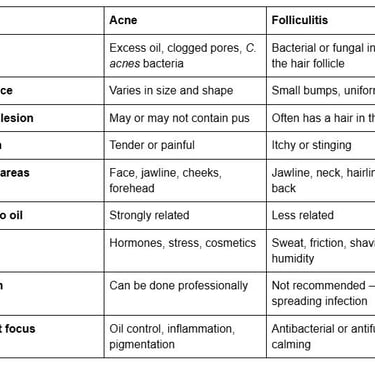
Acne is a skin condition caused by three factors working together: excess oil (sebum), clogged pores, and a bacterium called Cutibacterium acnes. It is strongly influenced by hormones, stress, diet, and comedogenic cosmetics.
Acne can appear in many forms on the same face, blackheads, whiteheads, red bumps, pus-filled pimples, and deep painful cysts. It most commonly shows up on the cheeks, forehead, jawline, and chin, and the lesions tend to be tender or painful rather than itchy.
What Is Folliculitis?
Folliculitis is a bacterial or fungal infection of the hair follicle. It is not primarily caused by oil, which is why typical acne products usually do not clear it and often make it spread.
Folliculitis shows up as many small, uniform bumps, often with visible hair in the center. It tends to itch or sting rather than hurt, and it commonly affects the jawline, neck, hairline, chest, and back. In the Seattle and Eastside climate, folliculitis flares frequently after sweating under rain gear, shaving, or wearing tight collars and workout clothing for long hours.
Acne vs. Folliculitis: Side-by-Side Comparison
Why Misdiagnosing Costs You Weeks (or Months)
Direct answer: Using acne products like strong salicylic acid, all-over benzoyl peroxide, retinoids, or physical scrubs on folliculitis can inflame the follicles further, spread the infection to neighboring follicles, and leave dark marks that last months. Folliculitis needs antibacterial or antifungal care plus calming support — the opposite of an aggressive acne routine.
On the other hand, treating true inflammatory or hormonal acne with only gentle calming products will not address the underlying oil production or deep inflammation.
The two conditions demand different strategies, and the fastest way out of a long flare is a correct diagnosis.
How to Tell at Home (Quick Self-Check)
Ask yourself:
Are the bumps all about the same size? Uniform size → likely folliculitis. Varied sizes → likely acne.
Do they itch or hurt? Itch or sting → folliculitis. Tender or painful → acne.
Can you see a tiny hair in the center? Yes → folliculitis.
Do they flare after sweating, shaving, or friction? Yes → folliculitis.
Do they flare around your cycle, in the same spots each month? Yes → hormonal acne.
Are they mostly blackheads, whiteheads, or deep cysts? → acne.
A professional skin analysis is still the fastest way to confirm, but this gives you a useful starting point.
Recommended Treatments at K Beauty Lab Seattle
Depending on what your skin needs, here is how we approach each condition at our skincare studio:
Cold Plasma — Best for Active, Inflamed Acne and Folliculitis
Cold plasma energy works on the surface of the skin to eliminate acne- and follicle-infecting bacteria, reduce redness, and calm inflammation. It is gentle and safe enough for sensitive, reactive skin, which makes it a strong fit for clients whose barriers are already compromised from aggressive home routines.
Book appointment for Cold Plasma
Potenza RF Microneedling — Best for Recurring Acne and Acne Marks
Microneedles combined with radiofrequency energy work deeper into the skin to regulate oil production, stimulate collagen, and improve the appearance of post-acne marks and texture. This is the treatment clients most often request when their acne "keeps coming back" no matter what they do at home.
Book appointment for Potenza RF Microneedling
Pico Laser — Best for Acne Marks and Pigmentation
If your active breakouts are under control but you are left with dark marks, Pico Laser (and our Pico Toning protocol) targets pigmentation precisely without affecting surrounding skin.
Book appointment for Pico Laser
Quick guide:
Cold Plasma calms and clears.
Potenza treats the root cause.
Pico targets the marks left behind.
Frequently Asked Questions
How do I know if I have acne or folliculitis?
Folliculitis bumps are usually small, uniform in size, often have visible hair in the center, and itch more than they hurt. Acne lesions vary in size and shape, include blackheads and whiteheads, and tend to be tender or painful. A professional skin analysis at K Beauty Lab Seattle is one of the ways to confirm.
Can I treat folliculitis with acne products?
Usually no. Aggressive acne products like scrubs, strong acids, and all-over benzoyl peroxide can worsen folliculitis by spreading the infection to nearby follicles. Folliculitis responds to antibacterial or antifungal care plus calming, barrier-supportive products — the opposite approach from a typical acne routine.
What is the best treatment for folliculitis in Seattle?
Cold Plasma is one of the most effective treatments for folliculitis because it reduces surface bacteria and calms inflammation without irritating the follicles. At K Beauty Lab Seattle, we combine Cold Plasma with a personalized Korean skincare home routine to clear the flare and reduce recurrence.
Why does my "acne" keep coming back in the same spots?
Recurring bumps in the same locations usually point to one of three things: hormonal acne (jawline and chin), folliculitis (jawline, neck, hairline, chest, back), or acne mechanica from friction (under masks, straps, or collars). Each needs a different plan.
Can K Beauty Lab Seattle treat both acne and folliculitis?
Yes. We treat both conditions and often see clients with a combination of the two. Our estheticians perform a full skin analysis at your first visit and build a treatment plan using Korean skincare principles combined with technologies like Cold Plasma, Potenza RF Microneedling, and Pico Laser.
Where is K Beauty Lab Seattle located?
K Beauty Lab Seattle is located in Northgate Seattle:
10564 5th Ave NE #201, Seattle, WA 98125
The Bottom Line
Acne and folliculitis can look almost identical, but they are different conditions that need different care. If your current routine is making things worse, the issue is probably not your products — it is that you may be treating the wrong condition.
Book an appointment at K Beauty Lab Seattle to get a skin analysis and a Korean skincare treatment plan built around what your skin is actually dealing with. Serving Seattle, Northgate, Bothell, Kirkland, Bellevue, Redmond, and the greater Eastside.
Contact
Get in touch with us for more information.
NEW Hours
NEW Location
10am to 6:45pm
1pm to 8:30pm
10am to 6:45pm
Closed
© 2026 K Beauty Lab. All rights reserved. | Crafted with care in Seattle.
Email: info@kbeautylabseattle.com
Phone: 206-999-6524
10564 5th Ave NE
Unit 201
Seattle, WA 98125

Popular Services
Quick Links
K Beauty Lab
Authentic Korean beauty treatments in the heart of Seattle. Experience the art of radiant skin.
Follow us on Instagram for the latest deals and promotions.
Seattle, WA
Mon / Tue :
Wed / Thur :
Fri / Sat :
Sunday :